Furniture / Everyday storage
Storage With a Second Purpose
Storage is most useful when it makes belongings easier to put away and easier to find. A second role can help it earn floor space, provided the extra function does not make access awkward.
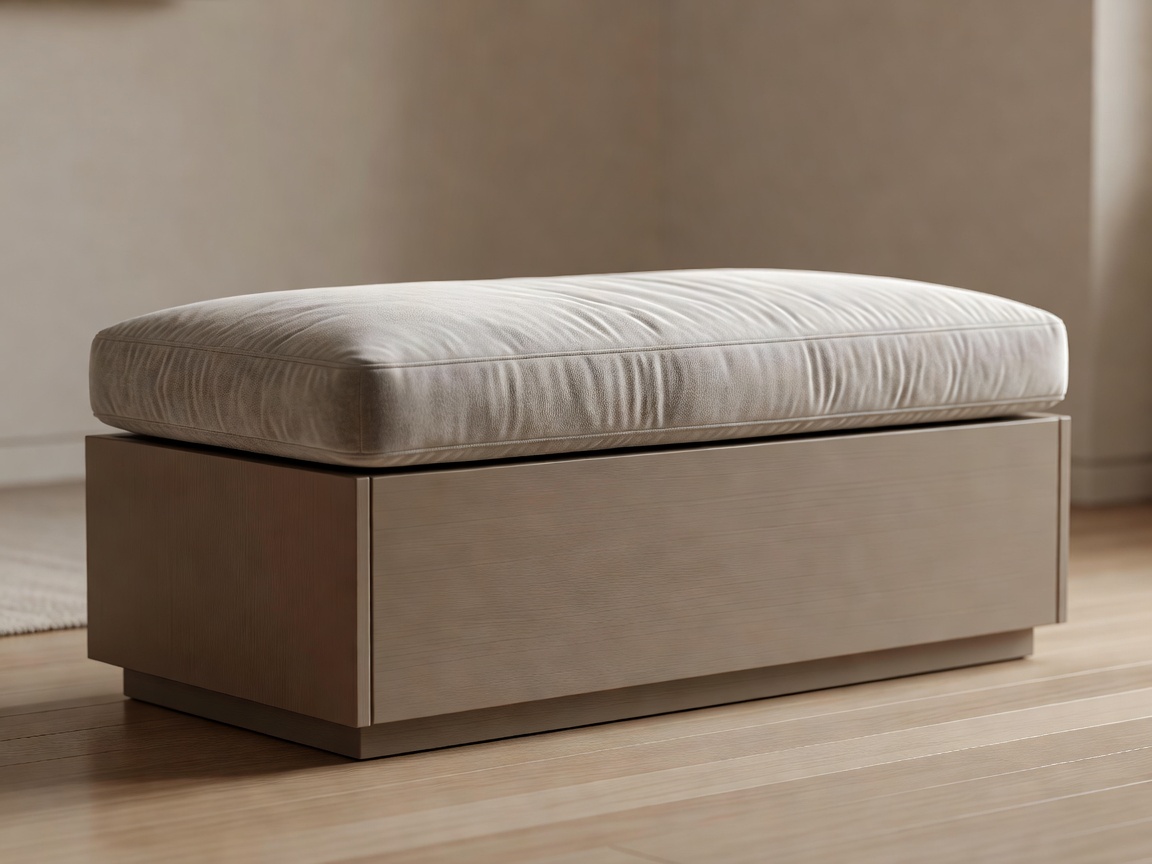
01 / Match storage to the rhythm of the room
Store the things that belong there.
Before choosing a storage piece, identify the objects that repeatedly collect in the room. Blankets, work supplies, toys, chargers and guest bedding each have different access patterns. Items used every day should be easy to reach; seasonal or occasional items can tolerate a less convenient compartment. This simple distinction helps avoid buying hidden capacity that is difficult to use.
Estimate the volume you need, but also consider the shape of what will go inside. A narrow compartment may hold folded linens well and be unhelpful for bulky equipment. Measure the interior opening, not only the exterior footprint. If a lid lifts, leave clearance above it. If drawers pull out, make sure they can open without hitting a sofa or blocking a walkway.
Make the secondary function genuinely useful.
A bench can provide a place to sit while holding shoes or blankets. A storage ottoman can act as a footrest or occasional perch. A low cabinet can divide a space while keeping its top useful for a lamp or a few frequently used objects. Each extra function comes with conditions: a seat needs appropriate height and stability; a surface needs a convenient reach; a divider should not close off light or make circulation confusing.
| Furniture form | Possible second mode | Check closely |
|---|---|---|
| Storage bench | Seating near an entry or bed | Seat height, lid support and safe access |
| Storage ottoman | Footrest or occasional surface | Stability, tray needs and lifting effort |
| Low cabinet | Room divider or display surface | Reach from both sides, width and visual openness |
Make retrieval part of the plan.
Storage works when things can leave it as well as enter it. If opening a lid means removing a lamp or shifting a heavy table, the compartment may become a place for forgotten objects. Keep frequently used items near the top or in an easy-access drawer. In a shared room, use broad categories and clear homes rather than complicated organization that only one person understands.
Be realistic about the weight of the contents. A bench that is moved every day should not be so heavy that it stays in the wrong place. A seat with a lift-up lid should be manageable to open and should support the lid appropriately. For safety and durability questions, follow the manufacturer's care and use instructions.
Storage planning prompts
- What items repeatedly clutter the room, and how often are they used?
- Can the storage opening be reached in every room mode?
- Does the second function replace another object or simply add a new one?
- Can each person in a shared space use the system intuitively?
A dual-purpose storage piece earns its place when the storage is accessible and the second purpose is something the room already needs.
Compare flexible work surfaces · Plan circulation and furniture zones