Furniture / Work surfaces
When a Desk Has Another Job
A desk earns its place when it supports focused work and fits the room when the work is done. Think through the full transition: where the chair goes, where the tools live and what the opened surface interrupts.
01 / Choose by routine
Begin with what happens at the desk.
List the tasks you actually do there. A laptop and notebook need a different clear area from a drawing setup, a monitor and a keyboard. Include the space needed to sit, pull the chair back and reach a socket. The useful desk is not simply the smallest one; it is the one that meets the task without claiming more floor than the room can spare.
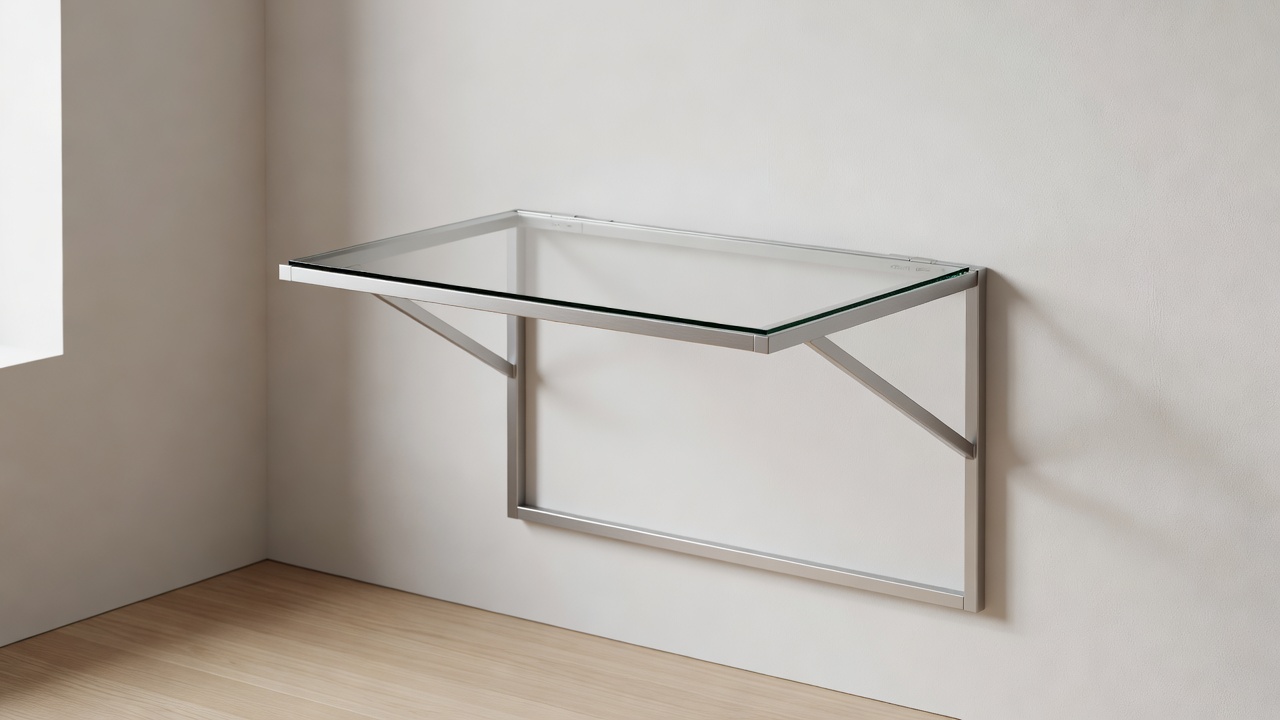
Then consider what the desk does when it is not a desk. A fold-away surface gives floor area back, but only if folding it is practical and the work materials have somewhere to go. An extendable table can serve several people, but its expanded position must still leave a route through the room. A storage desk can hide supplies, although deep compartments may make frequently used items less convenient.
Compare the working footprint, not just the closed size.
Measure the furniture in every mode. Include the chair, drawer pull, hinged top and any support leg. Mark those dimensions on the floor with paper or low-tack tape, then walk around the outline. Test whether the door can open and whether a second person can pass while the desk is in use. If it shares space with a bed or dining area, rehearse the transition between activities.
| Desk form | Useful second role | Practical check |
|---|---|---|
| Wall-folding desk | Clears floor area when closed | Wall fixing, open depth and where the chair is stored |
| Extendable table | Work surface becomes shared dining space | Clearance at full extension and cable management |
| Desk with storage | Worktop plus supply organization | Drawer access, knee space and reach |
Count the effort of changeover.
Imagine a normal weekday rather than an idealized tidy room. Do you have to unplug equipment, remove everything from the top, fold the surface and shift a chair before you can relax? A mechanism that takes a few steps may be perfectly workable if it happens once a day. A repeated, fiddly sequence may discourage the second mode entirely. Keep the tools for the next activity close to their destination, and give loose items a defined home.
Check stability and comfort in the work position. A compact top that wobbles or forces a cramped posture may be a poor trade for reclaimed floor space. Consider the height of the work surface, legroom, edge support and the way the chair fits underneath. For a shared room, agree on a simple reset routine so the desk does not become an indefinite landing place.
A small-room desk test
- Measure the open surface, chair pullback and cable route.
- Mark the closed and active footprints in the room.
- Decide where the chair and everyday work items will go.
- Try the changeover before committing to a layout.
The best flexible desk is not the one with the longest feature list. It is the one that supports the work you need and returns the room to its next purpose with little friction.
Plan the whole room around its routes · Explore seating that converts